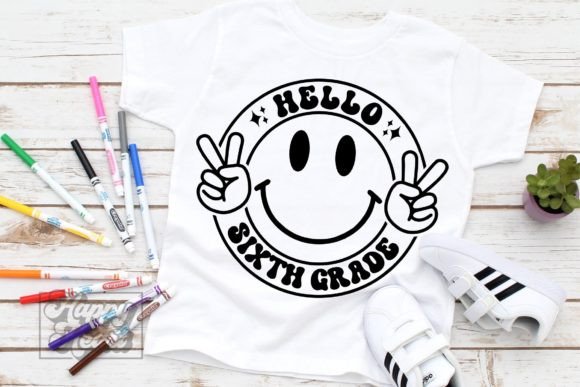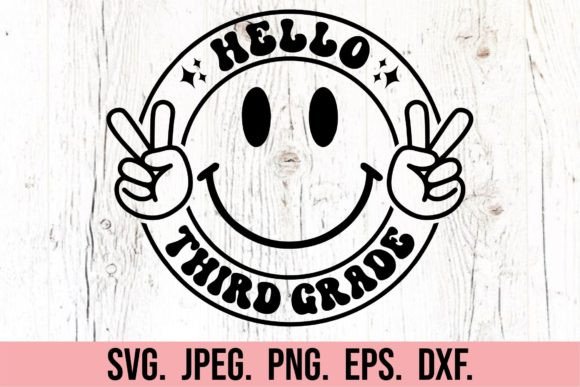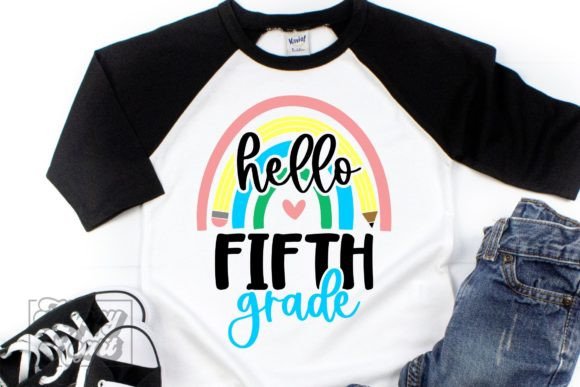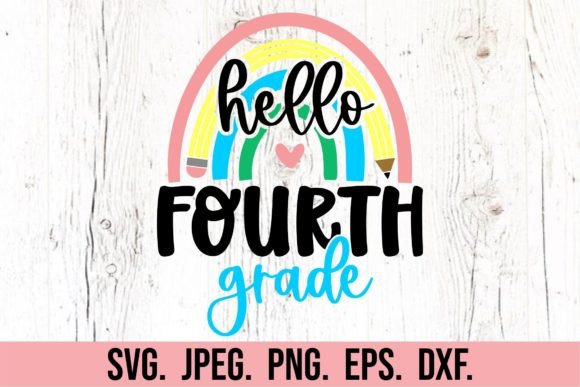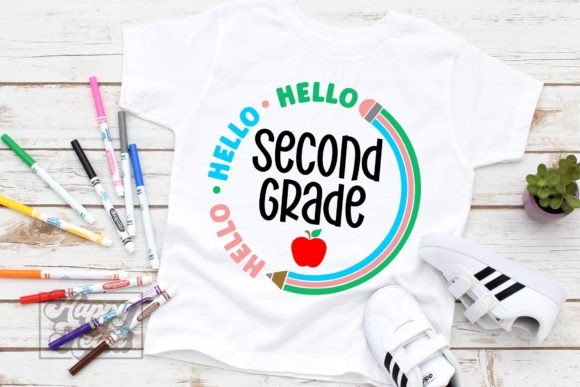
Hello 2nd Grade SVG – Back to School PNG
A Designer’s First Look: Friendly, Focused, and Ready for Real Stitches
When I opened the Hello 2nd Grade SVG – Back to School PNG folder—after unzipping it like the note advised—I wasn’t scanning for flash or novelty. I was asking: *Does this feel like something I’d confidently stitch on a child’s first-day-of-school tote bag?* The answer, after ten seconds, was yes. The layout is clean and centered, with gentle curves in the lettering and a subtle, hand-drawn charm that avoids looking overly digitized or stiff. It’s not cutesy overload—it’s warm, legible, and age-appropriate without leaning into cartoon clichés. That matters when you’re embroidering for real families who want sincerity, not spectacle.
Where This Design Earns Its Keep
I tested Hello 2nd Grade SVG – Back to School PNG as part of a small-batch run of embroidered cotton canvas tote bags for a local teacher appreciation pop-up. Why totes? Because they demand clarity at medium scale—and this design delivered. The letterforms hold up beautifully in satin stitch at 3.5" wide, with enough spacing between characters to prevent thread crowding. It also translated cleanly onto a lightweight organic cotton sweatshirt using tear-away + cutaway stabilizer combo—no skipped stitches, no puckering. As a machine embroidery design, it behaves like a well-considered craft asset: simple enough for beginners to manage, but polished enough to represent a professional craft business.
It shines brightest on items where warmth and intention matter most: baby onesies (paired with soft pastel thread), linen tea towels (where the clean lines read well against natural texture), and reversible patches for backpacks or denim jackets. I also used it as a standalone embroidery file on a set of personalized pillow covers for a boutique nursery line—customers responded immediately to how “genuine” it felt compared to busier, more generic back-to-school graphics.
Places to Pause Before Pressing Start
This isn’t a one-size-fits-all embroidery file—and that’s actually a strength. Its thoughtful simplicity means it won’t mask poor execution. On stretchy fabrics like ribbed knits or thin jersey tees, I recommend testing with light cutaway stabilizer and reducing stitch density slightly in the letter interiors. Tiny corners—especially where the “o” meets the “l” in “Hello”—can trap thread if your machine’s tension is off or your needle is dull. And while the PNG transparent background makes digital mockups easy, don’t assume that visual clarity carries over directly to dense fill-stitch embroidery on dark fabric: always test black thread on navy twill, or white thread on charcoal fleece, before committing to a full run.
It’s also not ideal for curved surfaces like structured caps unless resized thoughtfully—the proportions shift easily on a rounded crown. Likewise, avoid cramming it into hoops smaller than 4x4" without checking how the “2nd” baseline aligns; the baseline spacing is generous, which helps readability but demands breathing room.
What This Design Says About Your Finished Product
Using Hello 2nd Grade SVG – Back to School PNG quietly elevates perceived value. It doesn’t scream “sale item”—it whispers “thoughtful handmade product.” That builds customer trust, especially among Etsy sellers and small shop owners whose buyers prioritize authenticity over flash. When stitched cleanly, it reads as intentional—not automated. Parents notice that. Teachers do too. And because it avoids dated trends or licensed characters, it stays relevant across multiple school years, supporting long-term inventory planning for craft businesses.
That said, its quiet confidence means it relies on strong execution. A poorly stabilized run on textured burlap or rushed stitching on a thin apron will expose every limitation. So treat it like a collaborator—not just a graphic. Let it guide your choices: stabilizer type, thread color pairing (try heather gray thread on oatmeal linen), and even packaging (a simple kraft tag with the same font reinforces brand consistency).
Practical Notes from the Hoop
- Always test first: Run it on scrap fabric matching your final substrate—even if it’s just a swatch of the same cotton blend.
- Check contrast early: View your digital embroidery file in both light-on-dark and dark-on-light mockups before stitching.
- Inspect small details: Zoom in on the inner curves of letters—look for jagged vector edges or pixelation in the PNG that could translate to uneven satin stitch.
- Confirm licensing scope: Since this is a digital embroidery file sold as a Graphics asset, verify whether commercial use is permitted before selling finished embroidered products or bundling it into design assets for resale.
- Stabilizer isn’t optional: For anything beyond stable woven cotton, pair tear-away with light cutaway—especially for baby embroidery or holiday embroidery meant for frequent washing.
- Think beyond apparel: This works just as well as an applique design on a quilt label or as a running-stitch accent on a handmade notebook cover.
Final Thought: A Design That Fits the Moment—Not Just the Season
Hello 2nd Grade SVG – Back to School PNG doesn’t try to be everything. It’s not a seasonal explosion of apples and pencils. It’s a quiet, confident hello—exactly what a nervous second grader, a proud parent, or a detail-oriented craft business needs at the start of something new. Used with care, it becomes more than a Crafts download. It becomes part of a story: the first day, the first big step, the first time a handmade product feels truly personal. And in our work—whether we’re stitching sweatshirts, prepping Etsy listings, or designing boutique branding—that’s the kind of resonance that lasts longer than any trend.