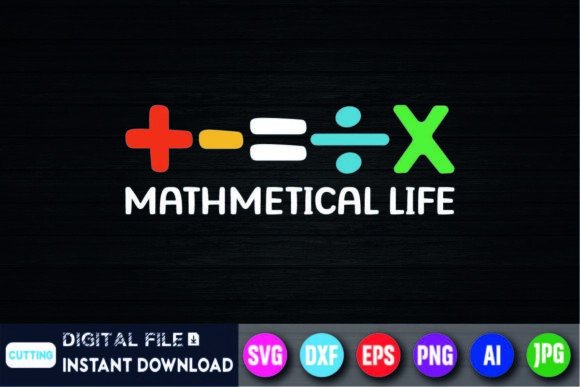
Mathematical Life Back-to-School Shirt Graphics
A Playful, Academic Charm That Fits Local Boutiques & Seasonal Brands
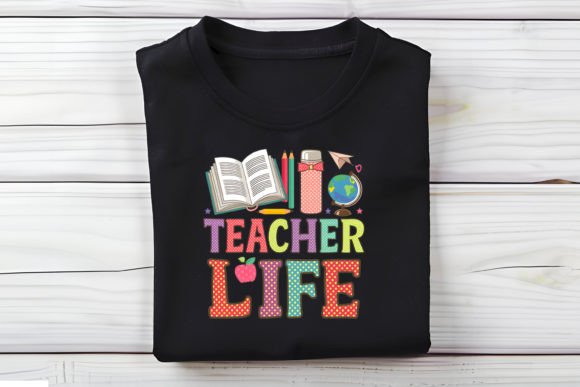
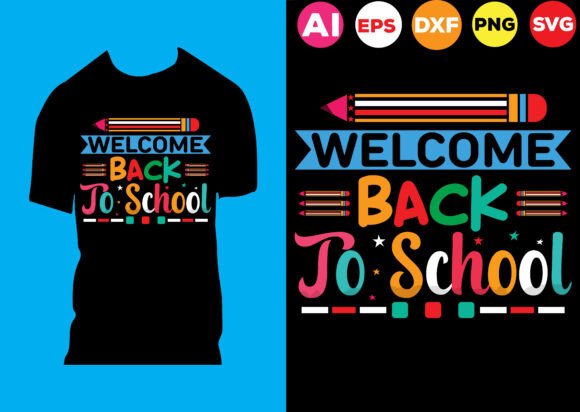
First glance at the Mathematical Life Back-to-School Shirt reveals a clever, lighthearted fusion of chalkboard texture, clean vector numerals, and subtle school-supply motifs—think compasses, protractors, and handwritten equations rendered with intentional imperfection. It leans into “friendly smart,” not sterile academia. For a local business—say, a children’s bookstore launching a back-to-school gift bundle, or a handmade soap brand releasing limited-edition “Study Soap” bars—the design instantly signals approachability, curiosity, and thoughtful craftsmanship. It feels modern but warm, structured yet human. Not premium minimalist, not rustic farmhouse—but confidently *educational-adjacent*: ideal for boutiques, learning studios, family-owned stationers, or cafés hosting homework hours.
Where This Graphic Design Asset Earns Its Keep in Real Branding Work
This isn’t just a T-Shirt Designs file—it’s a versatile visual anchor for small business branding across touchpoints. In packaging design, it works beautifully as a foil-stamped accent on kraft soap boxes or as a die-cut window overlay on cereal-box-style snack packaging for a local granola brand’s “Brain Fuel” line. As a product label, its layered SVG structure lets you isolate elements—swap the chalkboard background for a soft sage green to match your skincare brand palette, or extract just the pencil icon for a hang tag on hand-poured candles labeled “Calculus & Calm.” On thank-you cards for a tutoring center, it adds personality without overwhelming sincerity. For social media graphics, it scales cleanly into Instagram Story templates, Pinterest-ready printable study planners, or Facebook ads promoting a local art supply shop’s back-to-school sale.
Strengths That Build Customer Trust & Shelf Appeal
- Stronger first impression: Its balanced asymmetry and tactile texture signal intentionality—customers subconsciously read it as “designed,” not “downloaded.”
- Better product recognition: When repeated across stickers, tote bags, and menu boards (e.g., a coffee shop’s “Equation Espresso” seasonal drink), it builds cohesive visual memory.
- Clearer visual hierarchy: The layered SVG allows selective visibility—show full artwork on a poster, then simplify to just the compass icon beside pricing on a small price list.
- More consistent brand identity: Used alongside a restrained serif font and two-tone palette, it unifies everything from bakery bag stamps to digital newsletters.
- More polished marketing visuals: In product mockups, it avoids the flatness of generic clipart—its depth and texture translate well to printed merch and web banners alike.
Best Use Cases: Where Mathematical Life Back-to-School Shirt Shines
Deploy it where warmth and intelligence need equal billing: hero graphics for a local tutoring co-op’s website banner; decorative borders on printable recipe cards for a farm-to-table meal kit startup; subtle watermark patterns on tissue paper for a boutique’s gift wrap; or as the central motif on enamel pins sold alongside notebooks at a university-adjacent stationery shop. It excels in seasonal packaging—think limited-run “Back to Basics” tea tins for a herbalist—or as a recurring graphic element in editorial design for a small-town parenting magazine’s back-to-school issue.
Cautions: Where to Use It Thoughtfully
Avoid placing it where clarity trumps charm. Don’t crowd it onto ingredient-heavy food labels—its detail competes with regulatory text. Steer clear on luxury minimalist brands (e.g., high-end ceramics) where restraint is core to positioning. Skip low-contrast backgrounds (e.g., light grey text on a pale yellow SVG layer)—test readability early. And never assume it fits formal corporate branding: a law firm’s back-to-school scholarship campaign needs gravitas, not chalk-dust whimsy. If your packaging already features dense typography or photographic hero shots, this graphic design asset may muddy the message—not elevate it.
Practical Brand Designer Notes for Real Projects
- Test it on real packaging mockups—print a 2” x 2” version on your actual label stock to check legibility and ink bleed.
- Verify black-and-white usage: does the chalkboard texture hold up when converted to grayscale for monochrome print runs?
- Preview it on small labels—SVG layers may collapse or misalign if scaled below 0.5” without manual adjustment.
- Test it with your brand colors: drop your primary palette swatches over the SVG layers to confirm harmony (e.g., does burnt orange pop against the graphite tones?).
- Compare it with competitor packaging—does it stand out on shelf while still feeling category-appropriate?
- Check print quality: export PNGs at 300 DPI and inspect edges for fringing or anti-aliasing artifacts.
- Review SVG transparency: ensure background layers are truly transparent, not white-filled, for seamless integration into Canva templates or web design.
- Inspect vector editability: open the SVG in Illustrator—can you easily recolor individual glyphs or adjust stroke weights for finer control?
- Test typography pairings: try it beside a sturdy sans serif (for clarity), a delicate script (for contrast), and a bold display font (for event posters).
- Confirm commercial licensing: this digital product requires explicit commercial license verification before use on physical goods, client work, or resale items like branded mugs or tote bags.
Final Take: A Smart, Scalable Asset for Human-Sized Brands
The Mathematical Life Back-to-School Shirt isn’t a one-trick SVG—it’s a flexible, mood-driven design asset that supports storytelling for local businesses rooted in authenticity. Whether you’re designing packaging for a handmade candle brand named “Derivative Wax” or creating social media graphics for a neighborhood STEM camp, it delivers visual cohesion without sacrificing playfulness. Used intentionally—as part of a considered brand identity, not a decorative afterthought—it helps small business branding feel both intelligent and inviting. That balance? That’s where customer trust begins.